
NYC’s Top Criminal Lawyer
Brooklyn Drug Crime Lawyer
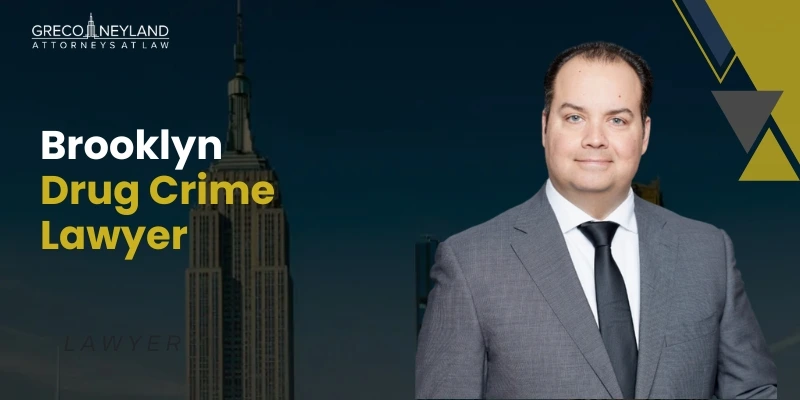
Brooklyn Drug Crime Attorney: Defending Your Rights From Arrest Through Trial
Drug crime charges are some of the most aggressively investigated and prosecuted criminal charges you can face. If you’ve been charged, then you need a Brooklyn drug crime lawyer, like Greco Neyland, to advocate for your rights and make the case against a guilty verdict.
We represent clients against all manner of drug charges and work to see that each one receives a fair trial. There are often strong emotions regarding drugs and drug crimes. To make sure that you are given a fair trial, you need a lawyer who will build a thorough, assertive defense that reminds the jury of their duty to set those emotions aside and judge the case based on the facts.
Lead attorney Jeffery Greco has been licensed to practice law in New York since 2011, in Texas since 2005, and in California since 2019, and he is admitted to practice before multiple U.S. District Courts. Those credentials give a Brooklyn criminal defense lawyer on this team the standing to carry a case from a Kings County arraignment into federal court if the charges end up there.
Reach out to talk through the specific charge on your case and what a defense built around the actual evidence could look like.
What Are Drug Crimes in Brooklyn?
Drug crimes are a broad category of criminal activity that involves the drug trade and controlled substances. The crimes can range from misdemeanors with relatively light sentences to felonies that could result in decades in prison.
Given the concern regarding the potential social impacts of drugs on societies, these crimes are aggressively pursued, and judges will often hand down harsh sentences, particularly if the person convicted is a repeat offender.
Some of the more commonly charged drug crimes include:
- Drug Possession – Possessing an illegal substance for either distribution or personal use can lead to charges that often carry stiffer penalties for repeat offenses or significant amounts of the substance.
- Drug Possession With the Intent to Distribute – Beyond possessing an illegal substance, you could face stiffer penalties if it can be shown that your reason for possessing the drug is an intent to distribute or sell it.
- Drug Paraphernalia Possession – Even without necessarily possessing the drug itself, charges can be made just for possessing tools or equipment that is used in drug consumption, distribution, or production.
- Drug Trafficking – The drug trade is punished harshly, including any sale, transportation, or distribution of drugs, if it can be proven that someone was involved in the commercial activity of an illegal substance.
- Drug Manufacturing – The production of a drug can often carry some of the harshest penalties, even for a first-time offender.
- Prescription Drug Fraud – Given the public energy around the opioid issue, prescription fraud has drawn quite a bit of attention recently, and any illegal acquisition of prescription drugs through fraud, forgery, or doctor shopping can result in harsh penalties.
Each of these charges falls somewhere inside New York’s controlled substance statute, and the exact subsection the district attorney’s office charges determines whether you are facing a misdemeanor or a felony that could mean years in state prison.
New York Penal Law Article 220: How Brooklyn Drug Charges Are Classified
New York groups nearly every drug possession and sale charge under Article 220 of the Penal Law, and where a case lands inside that article decides how much is actually at stake.
The lowest-level charge, criminal possession of a controlled substance in the seventh degree, applies when a person knowingly and unlawfully possesses any amount of a controlled substance. It is a class A misdemeanor, and a conviction can mean up to a year in jail and a fine, even when the amount involved is small and clearly meant for personal use.
Possession becomes a felony once the quantity crosses a weight threshold written into the statute, or once prosecutors believe the drugs were meant for sale rather than personal use. Criminal possession of a controlled substance in the third degree applies when someone possesses a narcotic drug with intent to sell it, or possesses a larger, specified amount of a substance such as cocaine or heroin.
This is a class B felony, and a first-time conviction can bring a prison sentence of 1 to 9 years along with a fine of up to $30,000. A prior felony conviction can push the minimum sentence higher still.
Several other possession and sale charges sit between these two extremes, each with its own weight thresholds, prior-record rules, and sentencing ranges. New York also has a separate class B felony for certain sale charges that happen on or near school grounds.
A drug crime lawyer in Brooklyn reviews the lab report, the weight listed on the police voucher, and the exact subsection charged, because a case that looks like a felony on the complaint can sometimes be negotiated down once the actual evidence is examined.
What Does a Brooklyn Drug Crime Lawyer Do?
A Brooklyn drug crime lawyer will take on a number of different roles in defending their clients. One of the primary roles they have is defending the rights of their clients. The Constitution provides for a number of rights that individuals have related to the criminal justice system.
A Brooklyn criminal defense lawyer can help see that those rights are respected and upheld.
Defend Your Rights
Some of these important rights include the right to remain silent and to avoid self-incrimination. Evidence obtained in violation of these rights is often inadmissible in court, and we will request that the judge prevent it from being presented.
It’s important to recognize that those rights extend both before and after an arrest. For instance, you have the right to be free from unlawful searches. If you are being investigated for a drug crime in Brooklyn, even before any charge is filed, a lawyer can help protect that right. You also have the right to a fair trial, and it is your lawyer’s duty to defend that right.
Investigate Your Case and Prepare a Defense
One of the most important things that a Brooklyn drug crime defense attorney does is investigate the claims made against you. We will look at the evidence available, speak with witnesses, and use the power of a subpoena if that is necessary. We will attempt to find evidence that can be used to defend against the charges you’re facing and create doubt around the prosecution’s case. The evidence that is gathered will be used to prepare a defense for you.
This defense will often need to be a response to the case that the prosecution is putting forth. This means we will need to consider how we expect the prosecution to make a case against you and identify where there may be weaknesses and places to create doubt regarding their narrative. During this pre-trial period, there may be an offer for a plea deal, which we can negotiate if it’s the right choice for your situation.
Sometimes, a plea deal can be the only option for receiving a lighter sentence. If a plea is not the right choice, we will be ready to execute the defense for you in court.
Pretrial Motions
Often, the process of defending you will begin before the trial even starts. There will be a number of pre-trial hearings and opportunities to address various issues before the actual trial. If there are any possible grounds to get the case dismissed altogether, we make that case before the trial. This is also an opportunity to challenge the evidence that’s going to be used against you.
So often, in drug charges, there are situations where the evidence relies heavily on an illegal substance itself. However, that substance may have been collected illegally or incorrectly. It’s also possible that the chain of custody could have been broken or there has been some kind of tampering, making that evidence unreliable.
All of these things could be grounds for getting the evidence excluded from trial, and motions to exclude it could be made before the trial. Sometimes, this alone is enough for the prosecution to drop the charges altogether.
Represent and Defend You in Court
If the case does go to trial, then we are more than prepared to craft a solid case to defend you. It’s important to remember that the burden of proof is on the prosecution to prove your guilt beyond a reasonable doubt. This means we do not have to prove their case is wrong. We only need to raise enough doubt about the prosecution’s claims that the jury cannot find you guilty beyond a reasonable doubt.
The exact nature of the defense strategy will depend on the specifics of your case, but we will work to defend your innocence with care and persistence. However, even the strongest arguments sometimes cannot overcome the evidence against someone. When this is the case, we will continue to make your case at sentencing and argue for a lighter sentence.
Even after the trial, if there is any opportunity for appeals, we can defend you through those means as well.
Kings County Courts Where Brooklyn Drug Charges Are Fought
Drug charges filed in Brooklyn move through one of two Kings County courthouses, depending on how the charge is classified. Misdemeanor drug charges, including seventh-degree possession, are arraigned and heard at the Kings County Criminal Court at 120 Schermerhorn Street in Downtown Brooklyn, where arraignments run seven days a week from 9 a.m. to 1 a.m.
Felony drug charges, such as third-degree possession, are sent to the Kings County Supreme Court, Criminal Term at 320 Jay Street, where indicted cases are assigned to a trial part and the Brooklyn grand jury sits.
Brooklyn also runs treatment court programs built specifically for people facing drug charges.
The Screening and Treatment Enhancement Part, known as STEP, offers court-monitored substance abuse treatment instead of a prison sentence for eligible first-time felony drug defendants, and the Misdemeanor Brooklyn Treatment Court does the same for people charged with lower-level drug offenses.
Both programs operate through the Brooklyn drug treatment courts, and completing the program can mean the difference between a permanent criminal record and a dismissed case.
Whether a case belongs in STEP, in the misdemeanor treatment part, or in a straightforward negotiation with the Kings County District Attorney’s office depends on the specific charge, the weight involved, and the person’s prior record.
How Do You Choose a Brooklyn Drug Crime Lawyer?
When facing a serious drug charge in Brooklyn, choosing a defense attorney can make all the difference in the outcome of your case. Here are some qualifications to consider:
- Multi-Jurisdictional Bar Admissions and Federal Court Access: Drug investigations frequently cross county or state borders or escalate to federal court. Lead attorney Jeffery Greco has been admitted to practice law in New York since 2011, Texas since 2005, and California since 2019, and is admitted to practice before multiple U.S. District Courts (SDNY, EDNY, WDNY). This expansive standing allows Greco Neyland, PC to seamlessly defend your case whether it remains in Kings County or moves into federal jurisdiction.
- Specialized Certifications and Technical Expertise: Challenging drug and impaired-driving allegations requires a technical understanding of law enforcement protocols. Jeffery Greco holds specialized certifications in NHTSA Standardized Field Sobriety Testing and as a NHTSA Drug Recognition Expert (DRE). This cross-disciplinary training provides deep insight into law enforcement science to effectively critique officer observations and testing methods.
- Local Familiarity With Kings County Courts: Navigating the local judicial landscape—including Kings County Criminal Court at 120 Schermerhorn Street, Kings County Supreme Court at 320 Jay Street, and specialized diversion programs like STEP—demands hands-on Brooklyn court experience to negotiate effectively and protect client options from day one.
- Meticulous Attention to Detail: Drug crime cases often turn on minor procedural errors, search-and-seizure violations, or gaps in the chain of custody. The defense team at Greco Neyland, PC thoroughly examines lab reports, police vouchers, and search warrants to spot flaws in the prosecution’s claims and build a strong defense.
Selecting an attorney with technical and courtroom experience can be key to securing a favorable outcome in your Brooklyn drug crime case.
A Drug Charge Is Not a Verdict: What You Are Still Entitled To
Drugs are one of the most politically charged issues in society, as addiction rates, overdoses, and other negative effects remain a serious public concern. This can make getting charged with a drug crime especially frightening. It can feel like your guilt has been decided before you’ve even had your day in court.
It’s easy to start to doubt whether or not you’re going to be given a fair opportunity or if, because of the subject of the crime, the jury will already have their mind made up. You will, though, have a chance to be defended.
There are important constitutional protections that are provided for those accused of a crime. You have rights, including a presumption of innocence and a requirement that prosecutors prove your guilt beyond a reasonable doubt before any penalty is handed down.
However, to make sure that these rights are asserted and respected often takes a skilled, persistent Brooklyn drug crime lawyer advocating on your behalf.
If you don’t want to leave anything in your defense to chance, you want a lawyer like Greco Neyland reviewing the evidence against you from the first court date forward.
Frequently Asked Questions
Do I need a lawyer right away after a Brooklyn drug arrest?
Yes. Kings County Criminal Court arraigns drug cases seven days a week, often within 24 hours of arrest. Decisions made at that first appearance can shape the rest of the case, including whether you qualify for a treatment court diversion like STEP or the Misdemeanor Brooklyn Treatment Court. Having a Brooklyn drug crime lawyer involved before arraignment gives you a better chance to raise diversion, argue for reasonable bail, and flag problems with the search before the case moves forward.
What is the difference between a misdemeanor and a felony drug charge in Brooklyn?
The line usually comes down to the amount of the substance and whether prosecutors believe it was for sale. Seventh-degree possession, a class A misdemeanor, covers possessing any amount of a controlled substance. Third-degree possession, a class B felony, applies once a weight threshold is crossed or there is evidence of intent to sell, and it can carry 1 to 9 years in state prison on a first conviction.
Can a first-time drug charge in Brooklyn be resolved through treatment court instead of jail?
It can, for eligible defendants. STEP accepts first-time felony drug defendants into court-monitored treatment instead of a prison sentence, and the Misdemeanor Brooklyn Treatment Court does the same for lower-level charges. Eligibility depends on the specific charge, the person’s record, and whether the case involves a sale allegation rather than simple possession, so this is worth raising with a lawyer at arraignment.
Will a drug conviction in New York affect my immigration status or a professional license?
It can. Certain drug convictions carry immigration consequences, including for people with lawful status, and many professional licensing boards ask about criminal convictions on renewal applications. The specific impact depends on the exact charge and disposition, which is one reason it matters whether a case resolves as a conviction, a reduced charge, or a dismissal.
What should I do if the police searched my car or home without a warrant?
Do not consent to any further search and avoid answering questions about what was found. New York and federal constitutional protections against unreasonable searches can make improperly obtained evidence inadmissible, but whether that argument succeeds depends on the specific facts of the stop or search, which a lawyer needs to review closely.
How much does it cost to hire a Brooklyn drug crime lawyer?
Costs vary by the complexity of the case and whether it is a misdemeanor or felony matter. Greco Neyland offers a free consultation to review the charge, the evidence, and the realistic options before you commit to anything.
Does a drug charge near a school in Brooklyn carry a harsher penalty?
New York law creates a class B felony for certain sale charges that occur on or near school grounds, separate from the penalty for the same sale elsewhere. Whether that enhancement applies depends on the specific location and the charge filed, which is something a lawyer checks early in the case.
Will my Brooklyn drug case go to trial?
Most cases resolve before trial through a dismissal, a reduced charge, a diversion program, or a negotiated plea, but every case is prepared as if it could go to trial. Preparing for trial from the start, including challenging the evidence and the chain of custody, is often what creates the leverage to negotiate a better resolution in the first place.
Let a Brooklyn Drug Crime Lawyer Review Your Case Now
Drug charges move quickly through Kings County courts, and choices made at arraignment, including whether to seek treatment court diversion, can close off options before you ever sit down with a lawyer. Greco Neyland, PC offers free consultations and represents clients across the Brooklyn, Manhattan, Bronx, Queens, and Long Island courts.
Reach out today for a free consultation to find out what your specific charge, your record, and the evidence against you actually mean for your defense.
-
Midtown (Main Office)
Location: 1140 Avenue of the AmericasSuite 1035 (10th Floor)
New York, NY 10036
Phone: (212) 951-1300
-
White Plains Location:
75 S Broadway, 4th Floor
White Plains, NY 10601Phone: 914-295-9000
-
Long Island Location:
6800 Jericho Tpke.
Suite 108W-1
Syosset, NY 11791 -
24 Hour Service
& Free Consultations
Available
© 2026 Greco Neyland, PC - NYC Criminal Defense Lawyer. All rights reserved
*Images are obtained under license from Canva and other third-party stock image providers, with attribution included where required.
Digital Marketing By 
 ES